


Block by block, not page builder
Custom blocks in the native editor, so the site stays fast and upgrades cleanly.
WordPress sites built to perform — not just publish.
A development company for WordPress that builds block-by-block rather than assembling a page builder. Custom themes, Gutenberg blocks, WooCommerce stores, and headless WordPress — engineered for speed, security, and content teams that ship fast.
What you get that a generic vendor does not.
Custom blocks in the native editor, so the site stays fast and upgrades cleanly.
Every plugin is a maintenance and security liability. We use few, and justify each one.
Content teams get blocks that constrain layout sensibly instead of a canvas where anything can break.
Hardened configuration, managed updates and least-privilege roles, because WordPress is the most-attacked platform on the web.
Caching, image handling and query discipline that hold up on real hosting, not just a benchmark.
Standard WordPress, no proprietary framework lock-in, exportable to another host or agency whenever you want.
Built from your design, so there is no bought theme's dead weight to carry forever.
Editing happens in the tool WordPress ships with, which keeps you on the upgrade path.
Query counts, asset budgets and caching layers decided deliberately rather than fixed after a complaint.
Core, theme and plugin updates on a schedule with a staging step, not applied hopefully on a Friday.
The capability most clients come to us for, and the work that surrounds it.
WordPress commerce built to hold real catalogue and order volume — custom product types, checkout that fits your fulfilment, and integrations with the systems you already run behind it.
Your design as native blocks, with the guardrails that keep layouts intact.
WordPress as the editing experience with a modern frontend, when the site needs both.
Moving off a page builder, an abandoned theme, or an agency that stopped answering.
Managed updates, backups, monitoring and a person who answers when something breaks.
The same nine stages on every engagement. What changes is what each one must prove in development for WordPress.
What the site has to do commercially, and who has to be able to edit it without help.
An inventory of the current site: plugins, custom code, content model and hosting.
A session on what becomes a block, what becomes a setting, and what should be dropped.
Design implemented as editor blocks, previewed the way editors will actually see them.
Editorial journeys tested with the people who publish, before launch rather than after.
A security and performance audit of what exists before we build on top of it.
Built in version control with a staging environment, never edited straight on production.
Cross-browser testing, accessibility checks and a full content-migration dry run.
Editor training, update schedule and a maintenance plan if you want us to hold it.
Everything we hand over at the end is listed on the handoff page.
Straight answers on where this service earns its cost — and where it does not.
Every theme is built block-by-block for your content — not a page builder skinned to fit.
Firewall rules, login hardening, and monitoring ship with every site — not as an upsell.
98 average Lighthouse score — we treat page speed as a feature, not an afterthought.
4 weeks of complimentary support, plus ongoing maintenance and update plans.
Shapes of work we ship most often in this pillar.
Multi-language, SEO-optimized WordPress site with custom Gutenberg blocks, lead capture forms, and CRM integration.
Multi-vendor marketplace with vendor dashboards, commission management, and custom shipping rules — handling 10k+ SKUs.
Content managed in WordPress, served through a blazing-fast Next.js frontend with ISR — best of both worlds for editorial teams.
Chosen per project. We will tell you when the boring option is the right one.
Sites we have designed, rebuilt and launched on WordPress.
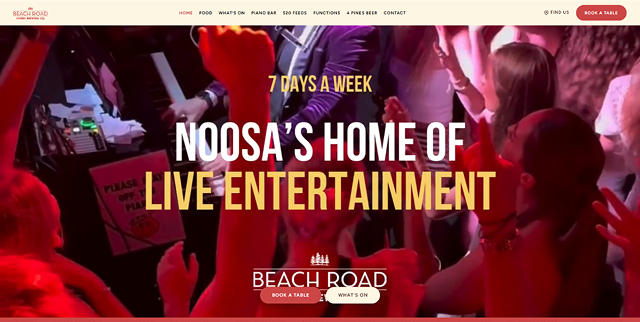
Beach Road Noosa is a 4 Pines live-entertainment pub in Noosa Junction. We redesigned their WordPress site — what's on, bookings, functions. See how.
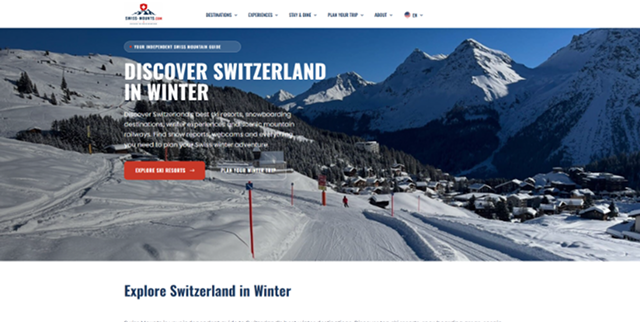
Swiss Mounts is an independent guide to Switzerland's mountains. We built it on WordPress with Divi 5 — destinations, events, webcams, six languages. See how.
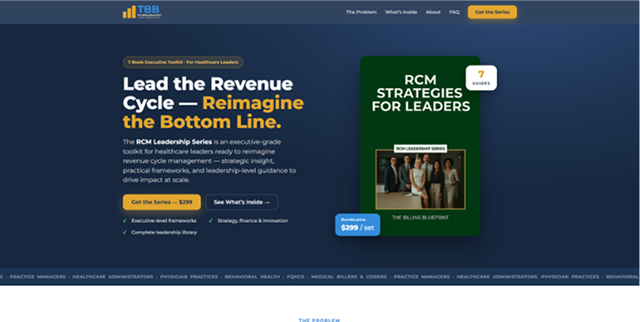
The Billing Blueprint sells revenue-cycle eBooks to healthcare leaders. We built their landing page with WordPress — two bundles, Stan Store checkout. See how.
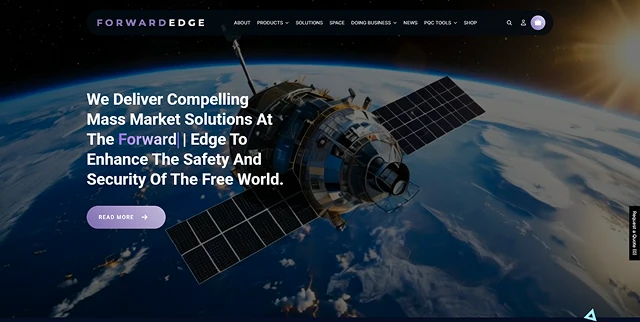
FORWARD EDGE delivers hardware and software solutions to enhance safety and security. We built their web platform — featuring AI-powered documentation, market research automation, and product access. See how.
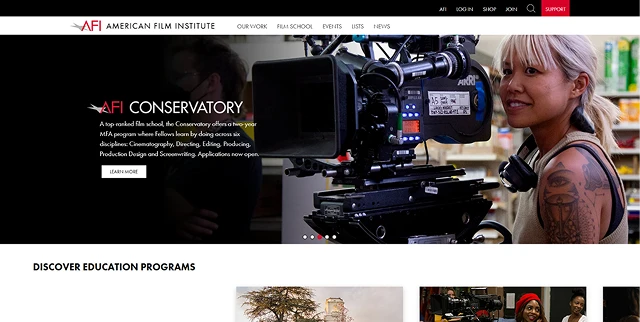
The American Film Institute honours film heritage and educates future filmmakers. We built their web platform to showcase conservatory programs, film festivals, and archives. See how.
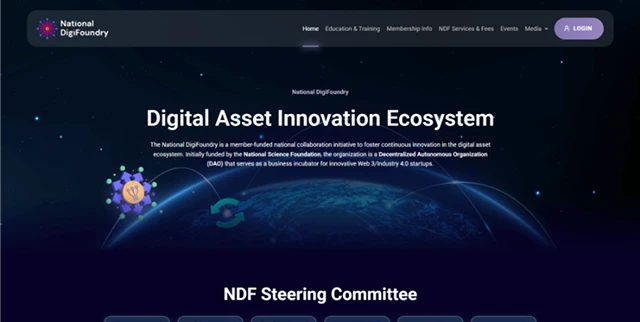
National DigiFoundry is an NSF-funded DAO fostering digital asset innovation. We built their WordPress platform — membership tiers, onboarding, tokenomics, Stargazer integration. See how.
We understand the constraints before we write the first line.
Storefronts, catalogue tooling, and the support layer around them.
Multi-tenant products, dashboards, and in-app AI features.
Plant floor visibility, quality, and ERP-adjacent systems.
Clinical and back-office tooling under real compliance constraints.
Audit-traceable workflows where every decision has to be explainable.
Routing, exception handling, and document-heavy operations.
Reviews from clients we have delivered for.
It is always a challenge to work with outsourced resources, and even so, Alian exceeded my expectations.
Alian Software development work is excellent, our clients are happy, and we continue to lean on them more as they get more integrated with our company.
They are incredibly helpful and adaptable, and always create something that leaves our clients satisfied.
They were extremely patient with adjustments and changes on our side.
I don't even know if I'd be where I am today without them because they really brought my vision to life.
For content-managed sites — absolutely. Nothing else gives non-technical teams the same editing power with the same ecosystem of plugins. For web apps or highly dynamic products, we'd recommend a different stack.
Minimal plugins, regular updates, WAF configuration, file integrity monitoring, and automated backups. We treat security as infrastructure, not an afterthought.
A marketing site with custom blocks typically runs $12K to $35K; WooCommerce or a site with complex content modelling and integrations sits higher. The main variable is how many genuinely distinct page types you need — reusing well-designed blocks is far cheaper than designing every page individually.
We build with native Gutenberg blocks instead. Page builders are quick to start with and expensive to live with: they add page weight, they lock your content into their markup, and migrating away later means rebuilding every page. Custom blocks give editors the same freedom inside guardrails, and they stay on WordPress's upgrade path.
Yes, and it is a common request. We start with an audit covering security, performance, plugin debt and how much custom code is in play, then give you an honest read on whether it is worth stabilising or rebuilding. Sometimes the answer is rebuild, and we would rather say that upfront than bill months of patching.
Shopify if you want the platform to handle payments, security, PCI and scaling, and you can work within its structure. WooCommerce if you need unusual product logic, deep integration with an existing WordPress site, or full control of hosting and data. We build both, so the recommendation is not a sales position.
Tell us the problem. If development for WordPress is not the right answer, we will say so and point you at what is.
24hTypical reply time on weekdays